
Map rank held, calls fell: what to tell the client
When map rank holds and calls fall, check 5 things before you answer. What each one shows, what it can't, and what to say to the client.
When a client's map rank holds and calls fall, tell them you will check 5 things and come back with counts. Rank says where the listing sat. It doesn't say how many people saw it, what sat above it, or who an AI named when the customer asked there.
No dashboard can show that AI took the calls, so don't say so yet. Here is the order to check, and what you can honestly say after each step.
Confirm that calls fell
Google's call number and the phone can disagree. In Business Profile, the calls metric counts clicks on the call button. Joy Hawkins of Sterling Sky notes that a click is not a confirmed call and suggests adding call-tracking data if phone calls matter.
The same Google page says the data covers organic results and Google Ads. If the client changed ad spend in those months, the numbers moved for a reason that has nothing to do with rank.
Get the real count from call tracking or the phone provider's log, and compare the same months last year. If the client has neither, say that your number is button clicks.
Put profile views next to calls and clicks
This split tells you where to look next. It comes from 2 practitioners, Marian Leonte and NaFormate, in a Local Search Forum thread on Oct 30, 2026. These are their working rules, not Google's definitions or a tested result. (Our own forum account, DenisOmerovic, also replied in that thread on Oct 28 with the audit numbers quoted further down.)
What the profile shows | Their reading |
|---|---|
Views level, actions down | The pack is still shown, and the click goes to the AI box or the ads above it |
Views down too | The profile shows less often than the average position suggests |
Branded searches hold, discovery falls | Page layout or AI |
Branded searches fall too | Demand or seasonality, not rankings |
Read this monthly. Google updates the searches metric at the start of each month, and it can take up to 5 days to appear.
Screenshot the page the customer sees
Search the client's main paying terms on a phone, from their area, and save each screenshot with the date. An owner can read a screenshot without any explanation from you. Look for 3 things above or in place of the listing.
- Ads. NaFormate reports, in the same thread, local service ads plus 1 to 2 pack ads in legal and health. On a phone, that pushes the first organic listing below the fold.
- An AI local pack. Hawkins describes a version that often shows 1 or 2 businesses, and says many versions have no click-to-call button. Her post cites Places Scout data putting it on roughly 8% of keywords, with no sample stated.
- An AI Overview. Check for it on each term, because it may not be there. In Whitespark's May 2025 study of 540 queries in Houston, Phoenix and Denver, AI Overviews appeared on 15% of local-intent queries and local packs on 93%. That data is 18 months old, so treat it as a reason to check, not as today's rate.
Hawkins's post also says that call data from 179 profiles, analyzed with Jepto, showed a year-over-year drop in calls, even for businesses in top positions. It gives no percentage. That supports asking the question, but this client's numbers still have to answer it.
Read Search Console for links in Google's AI answers
Search Console has a report for AI Overviews and AI Mode, open to all websites since Aug 31, 2026. It counts impressions by page, country, date and device, and it lists AI Overviews and AI Mode together.
Use it to see whether links to the client's site appeared less often in those answers. With no query breakdown, it won't tell you which search changed. Impressions there are links to the site, so a mention of the business with no link would not count. Clicks from both features count as clicks and sit inside the Web totals of the main Performance report.
Ask ChatGPT, Claude and Gemini directly
None of the reports above covers these 3 AIs, so count their answers yourself. Ask the questions a customer would ask, with the city in them and without the business name. Keep web search on, use new chats, and repeat, since one run is close to noise. Then count who is named.
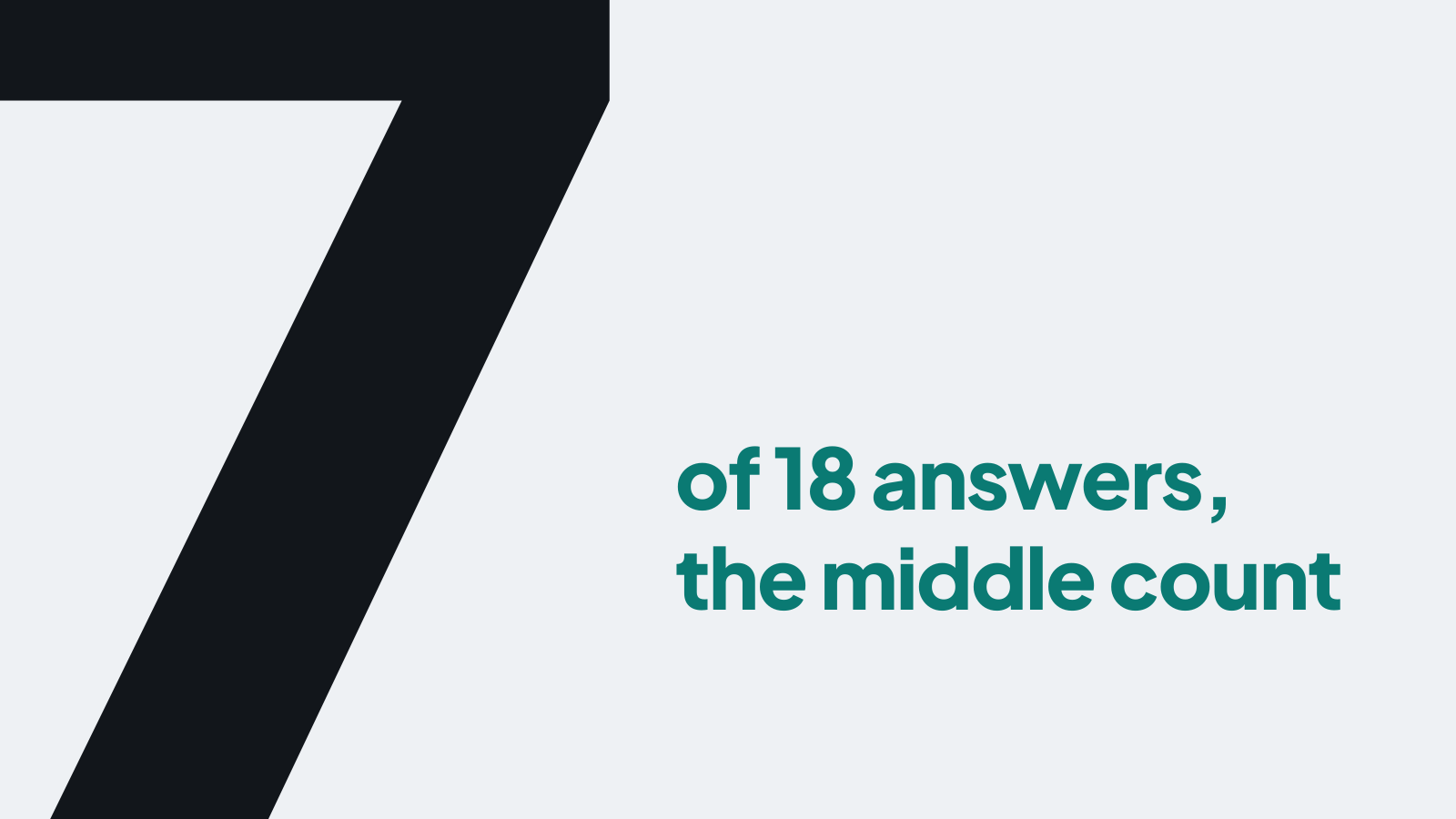
The count can land anywhere in the range. In 15 audits we ran on Oct 16 and 18, 2026, the businesses were named in 139 of 270 answers. Counts ranged from 2 of 18 to 18 of 18, and the middle was 7 of 18. In 8 of the 15, another business was named more often than the one audited. That sample included cafes, hotels, ramen restaurants, a bookstore and 2 small dental practices, so don't read it as a benchmark for a plumber.
Your referral and profile reports can also miss these customers. In one follow-up test on one Kansas City distillery, 6 conversations ended with a request to book. Every chat ended with a phone number, and none offered a booking link. A customer who dials that number has clicked nothing on the profile.
So add one line to the client's intake: "How did you find us?", with AI as a listed answer. It is imperfect, and it is the only step here that asks the caller.
A low count doesn't prove calls went to the AI. It shows who an AI names when a customer asks there, and that is as far as the claim goes.
What to say to the client
Fill in the brackets from your own checks and cut any line you didn't measure.
"Your map place held at [place] for [search]. Calls fell from [X] to [Y] between [months], measured by [source]. Profile views [held or fell] over the same months. On a phone, that search now shows [what you saw] above your listing. We also asked ChatGPT, Claude and Gemini [N] customer questions. They named you in [X] of [N] answers, and named [rival] in [Y]. We can't say how many calls each of these took. Here is what we will change first, and what we will count next month."
3 lines to avoid:
- "AI took your calls." You have counts of answers, not a trail from each answer to each call.
- "We lost [X]% of calls to AI." You have no data for that percentage.
- "Your rank is fine, so our work is fine." The client asked about calls, and this answers a different question.
Turn the answer into next month's plan
Agree on 3 numbers to report each month: real calls, profile actions, and how many AI answers named the client. Keep the questions fixed so the count stays comparable. With 18 answers, a change of 1 or 2 between checks is normal, and 3 or more is worth a look.
Then match the next step to what you found. Ads above the listing lead to a budget decision. A falling branded count leads to a talk about demand and season. A rival named far more often leads to a defined job: find the pages the AIs cite for that rival, and work on those first. A citation shows which page supports a sentence, not why the business was picked, so promise the work and the count, not the outcome.
That last job is the opening for an AI visibility retainer. The client asked about calls, and you can come back with a count, a named rival and a scope.
Run the AI half on one business
RecoRadar's report shows Google's map place under each question, next to how many AI answers named the business. To see it, run a free audit on your business or a client's. That audit asks ChatGPT, Claude and Gemini. The Starter and Agency plans add Google AI Mode and AI Overviews.